
Comes from
- Tea
- The leaf of one plant, Camellia sinensis
- Herbal tea
- Any other plant: leaves, flowers, roots, bark, seeds or fruit
Free UK delivery on all orders
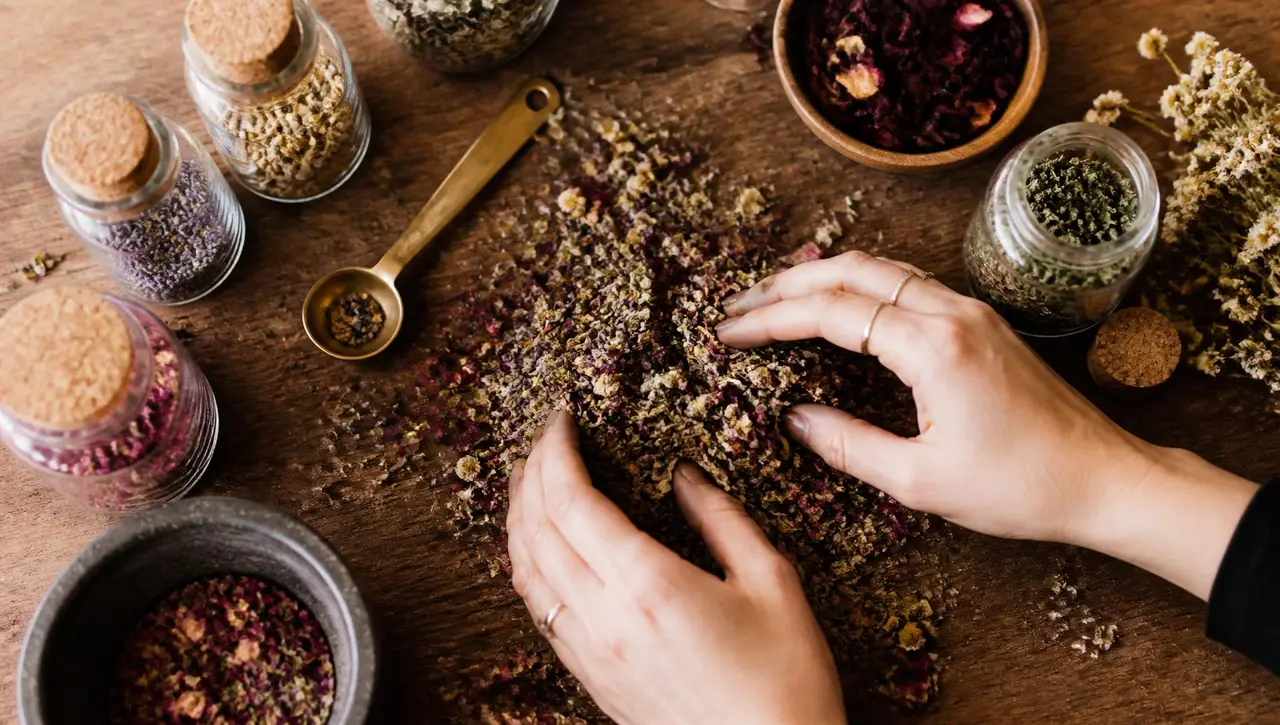
Tea, in the strict sense, is the leaf of one plant: Camellia sinensis. Black, green, white and oolong all come from it and all contain caffeine. Herbal tea, also called a tisane, is anything else steeped in hot water, such as peppermint, chamomile, rooibos or hibiscus. Most herbal teas are naturally caffeine free.
In a British kitchen both go in the same mug and both get called a brew. The difference matters when you are choosing by caffeine, deciding on milk, or working out why your peppermint tastes thin after three minutes.
“If it says rooibos, mint or flowers on the pouch and nothing else, there’s no tea plant in it. If green or black tea is anywhere in the list, there is, however herbal it smells.”— Colin Preston
The difference is the plant. All true tea comes from Camellia sinensis; how the leaf is handled after picking decides whether it becomes white, green, oolong or black. Herbal tea uses other plants entirely.
Water and steep ranges are typical starting points; always follow the pouch.
Tisane is simply another word for herbal tea. It comes to English through French, from the Latin ptisana and the Greek for crushed barley, once used to make a barley drink. In France you would order une tisane after dinner; in Britain you are more likely to hear herbal tea, infusion or fruit tea.
Fruit tea is a tisane too. A blend like Jam Tart is mainly hibiscus and rosehip, which is why it brews ruby red and tastes tart rather than malty.
Here is how the plant rule sorts a few of ours. The caffeine and brewing columns come straight from our current menu.
No. Once any tea leaf goes in, the blend contains caffeine, however floral or minty it tastes. Clear Out leads with green tea, and Moroccan Mint is gunpowder green tea with spearmint. Both read as herbal on the nose; neither is caffeine free.
The quick check is the ingredient list. Look for black tea, green tea, white tea, oolong, lapsang or Camellia sinensis. If none appears, it is a tisane. Our caffeine-free tea guide covers decaf black tea, which sits in between.
A little. Tea leaf gives up its flavour quickly and can turn bitter if overdone, especially green and white tea in very hot water. Herbal ingredients such as flowers, roots and dried fruit are tougher and usually want hotter water and more time.
For amounts and timings by type, see How to brew loose leaf tea, or try making your own with How to make herbal tea blends. More guides are in Tea guides.
Related guides
From our customers